
Hand Strength Missing After a Cast?
Broken bone after a fall? You know the drill — a cast, time, and therapy.
You might have had an experience like Jae. Five months after she broke her wrist, she still didn’t have her grip strength back. She did all the exercises working with specialized hand professionals in this area but wondered, “What else can I do to get back to normal?”
Read on to learn more about why function after a cast needs more specific support, especially after wrist fractures. This includes:
- Why is grip strength something to be concerned about?
- By taking a different approach, what else can we discover about functional gaps in her hand?
- How did the Bridging® Technique help Jae and what improved?
- Thoughts for you and your movement professionals if you, too, have grasp and grip strength concerns.
Grip Strength is Having a Moment in the Media. Why?
Why is grip strength getting so much attention in the media these days?
In additional to the day-to-day relevance in activities ranging from dressing to personal care, household chores, and recreational activities, grip strength is implicated as a longevity and wellness factor in a number of research studies.
Better hand function means better grip strength, which correlates to better outcomes, in many respects!
For your reference, here are two recent publications:
- Handgrip strength across clinical conditions and health-related outcomes in older adults: a scoping review (Frontiers in Aging, 2026)
- Grip Strength Decline in Healthy Aging (Physical Medicine and Rehabilation, 2026)
But what do these articles and studies fail to take into consideration?
For a plethora of reasons, most of us have had hand injuries, whether a sprain from overuse, or a passive trauma such as being immobilized in a cast due to a fracture.
At the Bridging Institute, we find the lingering source of pain or weakness in your wrist or other joints is related to your past traumas and medical interventions. You exercise and exercise, but strength doesn’t change.
Without re-establishing the interconnectedness of the hand muscles, your body is unable to access the forearm, upper arm, and shoulder muscles for the strength needed to support an enduring, firm grasp.
Jae’s story is a great example.
Cast gone. Occupational Therapy’s hand exercises complete. Grip strength still missing.
My friend Jae slipped and broke her wrist earlier in year. The bone healed over the period of five weeks with a series of casts keeping her hand and forearm immobilized.
Following removal of the cast, she worked with an Occupational Therapist specializing in hand function. Months of exercise later, she’s able to do most of her day-to-day living tasks, but strength remains elusive.
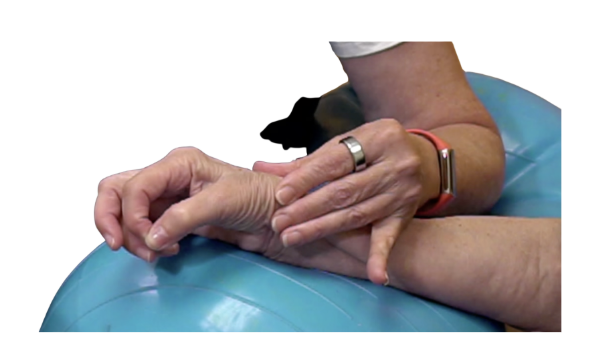
We discovered that the muscles and structures of the wrist and palm area were shrunken and tight, much like a dried sponge. There was no elasticity in the muscles to flex or contract in the palm, which is needed to connect finger movement to the stronger arm muscles.
The nuances of muscle function in her hand that restricted strength are parts of recovery generally not noticed by other professionals, yet the Bridging micromovement assessment quickly surfaced disconnects. After a series of gentle Bridging muscle resets her hand was moving better.
This is her update the following day …
“The fingers are working better today than they have since the fall. I can bend my hand a little bit better. Overall, it feels better than it has in a very long time.”
What Changed in the Session?
If you’re curious what this entire process looks like, Jae allowed me to video the time together.
From start to finish, you can see me assessing the stiffness in Jae’s hand, especially in the mid-palm and her thumb, and then resetting the muscle interactions.
The fun part is observing the changes that come about from very subtle Bridging muscle reset movements.
Gaps in the “Cast Followed by Exercise” Recovery Approach
This cast and weakness saga is common
What I found with Jae was not a surprise. The muscles in the base of her thumb and the middle of her palm were shrunken and stiff, much like a dried sponge.
We find this type of atrophy every time a client has had a cast, even for just a couple weeks. Exercise alone does not restore the muscle function because it misses a step. The muscle needs to be brought back to a state where it can function first. Below is a longer description of why.
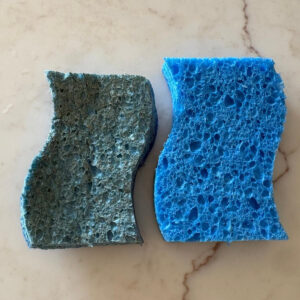 The Why: A Dried Sponge Concept
While the bone heals, the cast restricting movement also limits the muscle and connective tissue movement. This also restricts the tiny movement needed to support cellular function; the cells begin to shrivel and hibernate. This is muscle atrophy.
The fluid keeping the cells fresh can’t move about to get there. You can think of this as similar to being dehydrated, even though you are otherwise well hydrated.
To rehydrate a dried sponge, you have to drip fluid it on slowly. As the sponge hydrates, it becomes soft and pliable. Too much water before the sponge is hydrated, and it rolls right off. This is similar to what exercise does to the atrophied muscles. The muscle chain skips over the affected area.
In the video you’ll notice the movement used to “rehydrate” the muscles is soft and very subtle. Once the muscles begin to soften, they are able to stretch, once again linking the fingers and forearm for a stronger grasp.
It’s so amazing to see and feel!
Thoughts for You and Movement/Therapy Professionals
Here are some thoughts about recovery after having a cast:
For you
If you’ve done all the recommended steps for recovery, but you’re still missing strength and/or ease in function, there is more possible.
Still awaiting restoration are the stretchy, wiggly ways that muscles connect together. This enables muscles to function in more intricate ways, and to access the network of larger muscles for strength and endurance.
Your trusted professional should be able to tune in once you provide them with the above information. It they are not yet Bridging trained, they may have other approaches to help, but may take additional time for resolution.
For therapy and movement professionals
A few questions come to mind:
- Are you checking tri-planar of each individual digit joint, and the way it interconnects into the palm and forearm muscles?
- Are you checking movement and stability in both open hand and oppositional thumb orientations?
- Are you checking the ability to recruit the opposing movements needed to stabilize?
Example: finger extension needed to stabilize flexion.
Each of these are necessary for strength and full function. Being aware of the presence or absence of these interactions can guide you to a more comprehensive treatment plan.