
👟👟 Shoes — Which Help Your Feet Feel In Control?
“The podiatrist told me to get these shoes. They feel comfortable, but I’m not sure if they help my balance.”
This is the comment from my client, Sarah, when we recently did some balance testing. We tested her balance with socks on, and then again with the shoes recommended by her podiatrist.
Much to our surprise, fundamental balance considerations were worse with her shoes on! So what should she do?
That’s what we will explore — the trade-offs of balance and shoe choices, and how to think beyond what a podiatrist or the running store may recommend for shoes.
And, of course, I have a video to show you a simple way to test your movement as you try on various pairs of shoes!
Beyond What the Podiatrist Recommends for Shoes
Every medical specialty has their niche. Each specialty makes sure the system of the body under their purveyance is working as expected.
Podiatrists are no different. Are your feet healthy, structurally sound, and disease free? Pretty straightforward considerations. They generally recommend shoes based upon levels of support.
Same for athletic and specialty shoe stores — they fit you based upon various factors of arch, weight placement, and stride. But not balance.
When balance is a challenge, considering how your shoes factor in matters!
From a movement and balance perspective, think about how well the shoes you are trying on allow your feet and ankles to function. This includes:
- Shifting to allow you to stay balanced on uneven surfaces.
- Interacting with calf, thigh, and core muscles to keep you stable while you move.
- Absorbing force when they strike the ground surface.
- Propelling you forward with efficient movement.
Shoes can enhance or take away some of the feets’ ability to function with the rest of the body. That’s something most of us don’t think about. To help you ‘see’ what I’m talking about, a video is valuable.
How do shoes impact function?
In this short video I show you three critical ways you should be able to shift and maintain good balance.
If a shoe is too stable, movement will be effortful, or impossible to shift.
If the shoe is not supportive enough, you may shift and feel like you your going to begin falling.
You want to find the shoe which allows reactive shifting, but also keeps you from falling.
Which kind of shoe? There are so many!
No, I don’t have a specific shoe recommendation for you, sorry. However, I do have specific design factors of shoes to take into account when you are selecting your next pair.
Beyond comfort, I consider how the shoe enables the movement of the rest of the body, as illustrated in the video. Here are some common attributes of shoes and why they may impact balance and functon:
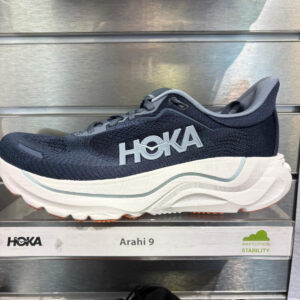 Supportive styles?
These shoes can be too stable and supportive. They limit the reactive ability of the legs and core to adapt for good balance reactions. The stability can also compromise efficiency, making it more tiring to walk for a longer period.
If your lower body or feet have had substantial injuries or surgeries these may be your best choice.
(Brands include ASICS, Brooks, HOKA, and New Balance models.)
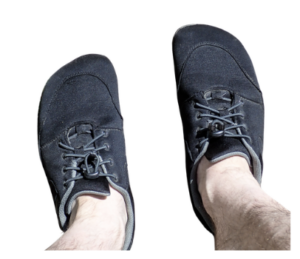 “Barefoot” styles?
Depending upon your foot structure ‘barefoot’ may be the most amazing choice, or the worst thing ever! Why the difference? It often depends upon injuries you’ve had over the years and how well your sensory receptors are working.
The barefoot concept allows the highest degree of movement within the foot, eliciting the greatest amount of sensory feedback. For many people, this is too much of a good thing. It also stresses old injuries the most.
(Brands include Xero, Vibram, Merrill and Altra. Many of these have a wide front toe box.)
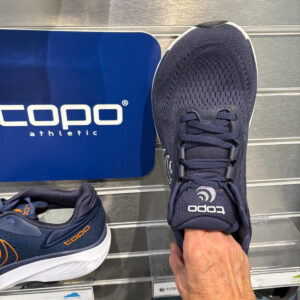 “Zero Drop” styles?
This refers to the difference in height from the back of the shoe to the front. Flat shoes seem to work well for some, but others prefer to have some heel build to them.
The primary factor the height of the shoe affects is the angle that the foot is able to interact with the knee. This is related to how the calf muscles on the front and back sides interact with the hamstring and quadriceps muscles of the thigh. The flat design mimics barefoot, but offers some cushion between your feet and the ground.
(Brands include Altra, Topo, Xero, Merrill, and Flux.)
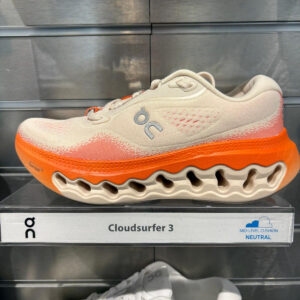 Highly Cushioned styles?
Popular these days, the HOKA brand is most well known for this style of shoe. As advertised, it’s like walking on a cloud.
Comfortable, but critical balance reactions are not enabled. Why? The soft surface doesn’t provide an environment for the feet muscles and tendons to articulate to trigger the sensory feedback to the nervous system for your autonomic balance reactions.
(Brands include all the big name brands–ON, HOKA, Nike, Saucony, Brooks, Merrill, ASICS, and New Balance.)
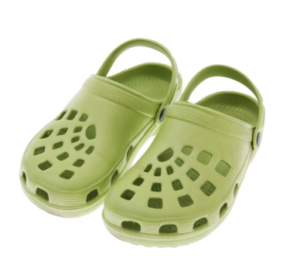 Crocs?
These really are their own style! Despite much bad press, they remain popular years after they were a fad. Why? Because they uniquely provide a somewhat firm sole for muscles and tendons to react to, but have an unstructured top which lessens the sensory feedback from the entire foot.
Sometimes the support of a full shoe upper is just too much for the nervous system. Are they for sports? NO, but a lot of walking happens in Crocs.
They help with balance reactions, and allow lots of freedom of movement between the foot and ankle.
But, some of these choices are not ‘supportive’!
For a textbook foot, yes.
I haven’t met many people with textbook feet. All of the above styles have a role to play for specific people and situations. You have to learn to trust yourself, and ignore what online marketing is telling you is best. They don’t know your feet!
What I care about — is that your shoe choice enables and supports efficient movement and good balance reactions.
Which brings us back to Sarah
I used the Balance Tracking System to test her balance. She has some distinct limitations. We then tested the same skills with her shoes on to see how much they help.
Surprise! Those expensive New Balance shoes recommended by her podiatrist? The balance test scores were worse with the shoes! In all fairness, one thing was better — her ability to coordinate ankle and hip movement for postural control while walking.
So, what should she do?
The soft sole of the shoes did NOT support the function of her sensory receptors to generate enough movement information for her brain to react to. But the shoes DID support smoother movement. Just like Goldilocks and the three bears, there is likely a middle choice waiting for her to try — softer soles, but not as soft.
Sarah’s homework for her next appointment is to go to a shoe store and find two other options that feel comfortable. We will test her balance with each, and she can keep the ones that perform best.
What’s Next: Spinal surgery or fusion? A missing aspect of recovery.