
It Was ‘Just a Fall’… So Why Aren’t You Back to Normal?
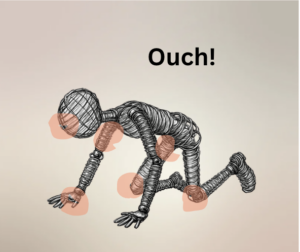 Quick Overview: Part 1 in a series on how a fall affects your ability to move
Falls don’t just cause bruises. They can markedly change how your body moves and reacts for years. In this series, we will explore what most recovery models completely miss:
- How falling creates hidden disruptions in your movement system
- The physics of impact — and how your body absorbs force
- Why a fall in childhood can alter development
- Insights to help yourself, given the specific nuances from your fall
 I take a fresh look at assumptions about how muscles work together as a system. When muscles don’t work well together, I look to the past to identify trauma, illness, or development that might be the cause. It’s the kind of thing your doctor likely didn’t study — but it explains a lot about what you’re experiencing.
What remains isn’t the illness or trauma — it’s the shifted alignments that restrict how movement should flow through the body.
This is particularly relevant for those of you who may have fallen with recent ice and snow. I want to help you recognize why your recovery may be stalled, so you get back to your active life!
We’ve All Fallen
Sports. Ice. Stairs. Being knocked off balance. Some falls are clumsy. Some are unavoidable.
This discussion is not about Balance Training, or how to improve your balance to prevent falling. It is about what happens to your body when you hit something, and why your recovery can be elusive.
Minor falls leave you shaken and sore the next day.
Major falls are pretty clear. They leave broken bones, concussions, and emergency care.
But there’s a huge middle ground; falls that “weren’t that bad” … yet you never feel the same afterward.
This is where many people get stuck.
If this is you, it’s all too familiar.
Medical imaging looks fine. Rehab is done. You’re told to strengthen and stretch. But you still don’t move, react, or feel like you used to.
That’s because falling affects layers of your system that most movement or medical professionals were never trained to assess or reset.
Let’s start with an analogy to help paint a picture about a complex topic.
If Your Body Were a Car …
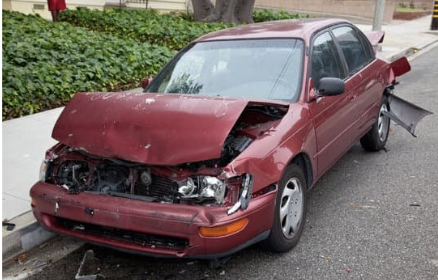
 Modern vehicles are complex systems. So is your body.
After a car accident, there are two kinds of damage:
Visible Damage
Scrapes. Dents. Broken parts.
Easy to see. Straightforward to repair.
Invisible Damage
Frame misalignment. Sensor disruption. Safety systems knocked offline.
Harder to detect, yet very important to fix.
Now here’s the part most people miss about when we fall — our bodies are the same.
We have visible and invisible damage.
The Three Tiers of Damage from a Fall
Similar to the vehicle, I like to break the body’s tiers of damage from falls into three layers. They each have unique characteristics, and require unique attention to resolve.
Tier 1 – Visible Trauma
Cuts, scrapes, and bruises are the main effects. Add ice, rest, and time, and these usually resolve within a few days to a week.
Tier 2 – Structural Disruption
Sprains, strains, and fractures are the main issues… but also subtle misalignments and muscle “jams.”
Bones heal. Tissue heals. But healed does NOT mean coordinated or functioning well.
Just like a car needs a frame realignment, your body often does too, in order to function like you expect it to.
Tier 3 – Sensory & Reaction System Disruption
This is the most overlooked layer. Your balance, reflexes, and protective reactions are like a car’s safety sensors. A fall can scramble these systems. When your sensory system integration is off, you may notice:
- You move more cautiously
- Your reactions feel slower
- You feel stiff, guarded, or “off” for no clear reason
The Bottom Line
Common imaging does not show the FUNCTIONAL disruption of Tier 2 and 3 — the structure and the sensory systems. The jammed and torqued joints, and off-center or blocked reactions.
Most common rehab models and protocols don’t address these either.
But these effects are very real and often the reason you don’t move or feel right.
To help make these concepts more tangible here is short case study. It exemplifies how falls can be additive when the sensory issues are not addressed. And, yes, these disrupted relationships can be reset.
Why Do I Keep Falling?
In this video, meet Archana. She’s had a series of falls over the years, and become more concerned about her overall balance.
We discover which fall affected her the most, and check how her vestibular system was skewed in the process.
The best part is seeing the reset and how quickly she changed.
Why Exercise and Stretching Don’t Fix These Disruptions
Similar to Archana, after a fall, you’re careful. You strengthen, stretch, and maybe use a foam roller to help with imbalance or tightness. She did many of these and incorporated other tools such as yoga and Ayurveda.
You do the work. Weeks pass. Months pass. And you still don’t feel right.
Because the issue isn’t just tightness or weakness. It’s force that moved through your body in directions it was never designed to handle — leaving body parts jammed, over-stretched, or out-of-sync.
The disruption also affects your nervous system, which in turn affects your reactions (the sensory system aspect). You inexplicably feel the need to be cautious; this is why.
Exercise alone doesn’t help with the jammed/torqued joints, or the sensory reactions.
In the next part of this series, we’ll break down the physics of falling so you can see exactly why this happens. Understanding why is key to insights on how to help.