

Falling — What Else Can You Do to Help Yourself Recover?
Quick Overview: Part 4/4 in a series on how a fall affects movement
This month’s series explores how a fall can quietly affect your ability to move. We’re diving into what most recovery models miss:
- How falling creates hidden disruptions in your movement system (Link to part 1.)
- The physics of impact — and how your body absorbs force (Link to part 2.)
- Why a fall in childhood has unique implications (Link to part 3.)
- What you can do to help get your body put back together
 Welcome! I take an engineering-based look at how muscles work together as a system for movement and coordination.
You have pain or balance concerns when muscles don’t coordinate and it turns out there is usually a trauma, illness, or development at the root. It’s the kind of thing your doctor likely didn’t study—but it explains a lot about what you’re experiencing.
Things You Can Do to Help Yourself (w/o Bridging)
Figure out the “Twist-Lock”
When your recovery from falling is not per expectations, but scans are clear, there is usually a torque associated with the compression from your landing.
Just like a medicine bottle where the cap won’t come off by twisting alone, your injury won’t clear up with just more time. The proper muscle and joint interconnection is locked out. So what can you do to help?
When Bridging is Not an Option
If a Bridging® session with us is not an option you can un-lock your body with help from a friend/partner help with. Similar to opening your medicine bottle, your support partner can help you with these three distinct steps:
- Figure out the forces on the body: Reenact the story of your fall. Where were the compression points where you hit? And how might you have twisted as you landed?
- Re-create the position(s) of impact: Position yourself similarly to how you landed. Creativity in finding support becomes important here. That’s one reason we love a variety of supports such as the peanut balls you see in our photos and videos.
- Support and rock: Have a friend/partner gently rock your body while adding a slight amount of compression to the sections that likely twisted. This might be look like them curling your entire body into a ball and lightly squeezing you similar to a hug, and rocking you for 10-15 seconds. You’ll likely feel like you want to unwind and stretch some after this. You can repeat as often as you’d like.
If you’re saying to yourself, “Wait, what?” see the videos that follow. The first takes you through the thought process for figuring out Steps 1 and 2. The second video shows examples of using supports and gentle rocking to decompress the impact of the fall.
Your trusted professionals can help too!
Many of you have professionals (Physical Therapist, Massage Therapist, Chiropractor) you already work with and trust. Share this newsletter and suggest they watch the videos to get an idea of how to support and rock with slight compression. Ideally, you will both collaborate to find the position and movement to get your body unstuck!
Discussion of How the Body is Twisted and Compressed in a Fall
In this video, I walk you through the typical ways your body experiences force and torque when you’ve fallen.
This should help you think through your own injury and leave you with some strategies for unlocking your body.
Example of Compression with Torque
In this video, you will see me working through several different aspects of impact and torque from how Archana fell.
There had been multiple falls which complicated our problem-solving, but this will also give you an idea of how falls are additive in how they affect you.
An Overview On Falling Impacting the Way You Move
Recapping the main points of this month’s Falling series
The one big take-away is that there are structural reasons why you’re not recovering as you’d expect.
Exercise, ice, red light, needling, massage, or adjustments don’t specifically address the physics of what got torqued and jammed. They do help you feel better, but it’s often momentary.
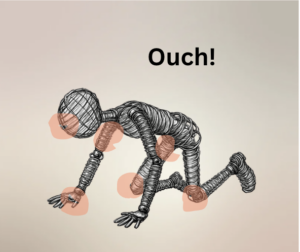 Concepts: Why Falls Affect You More Than You Think
A fall isn’t just an event — it can change how your body functions long after the bruises fade.
- Not all damage is visible. Beyond cuts and fractures, falls can disrupt structural alignment and sensory reactions that affect balance and movement.
- “Healed” isn’t the same as “back to normal.” Muscles often stay jammed, twisted, or over-protective even when imaging and exams look fine.
- Most recovery models miss the framework. Without addressing structural and sensory system changes, people are left wondering why exercises alone don’t fix things.
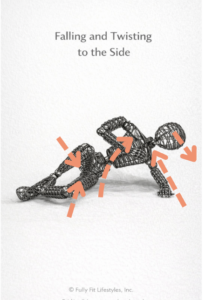 Physics: How Force Changes the Body
Understanding how force should move through the body explains why certain falls create lasting issues.
- Force is designed to travel from the ground up. Feet, legs, hips, and core absorb impact in a specific sequence — falls often reverse or overload this pathway.
- Speed, magnitude, and torque create “movement jams.” Rapid impact, twisting, or high force can lock structures in ways the body doesn’t naturally reset.
- Physics explains persistent symptoms. Restricted breathing, limited rotation, fatigue, and stiffness often reflect disrupted force flow — not weakness.
 Kids & Falling: The Outward Effects are Often Different
Children bounce back quickly — until developmental systems are disrupted.
- Falls can affect coordination, sensory processing, and self-regulation. A child’s body may work harder to stay centered after impact.
- Small bodies absorb impact differently. Because growth, spatial awareness, and nervous system development are ongoing, falls influence more than just one joint.
- Resilience doesn’t mean nothing changed. Kids may appear “fine” yet show avoidance, clumsiness, or behavior shifts that signal lingering movement disruption.