
Invisible After-effects From a Car Accident
Rear-ended, but “I Feel Fine”
Past Vehicle Accidents: Why Your Pain May Be Connected
Auto accidents are more common than we realize — especially in the wild-west of post-COVID driving. (Yes, its a thing!) Statistically, 29-30% of all vehicle accidents are a rear-end impact with another 20-25% being side-impact (T-bone). Does this include you?
Regardless of how you were hit, some of your current odd aches and pains may be related, even though the accident was months, or even years earlier.
In this two-part series, we’re looking at how you may be silently affected, and how those effects can show up as pain — sometimes years later.
- Part 1/2: Rear-end and side-impact (T-bone) accidents — and the lingering effects you may still feel. Read the full article here.
- Part 2/2: How the Bridging® Technique considers the impact of these accidents through a micromovement perspective, and how even the smallest details of the impact matter.
The Impacts May Be Subtle, Yet Significant
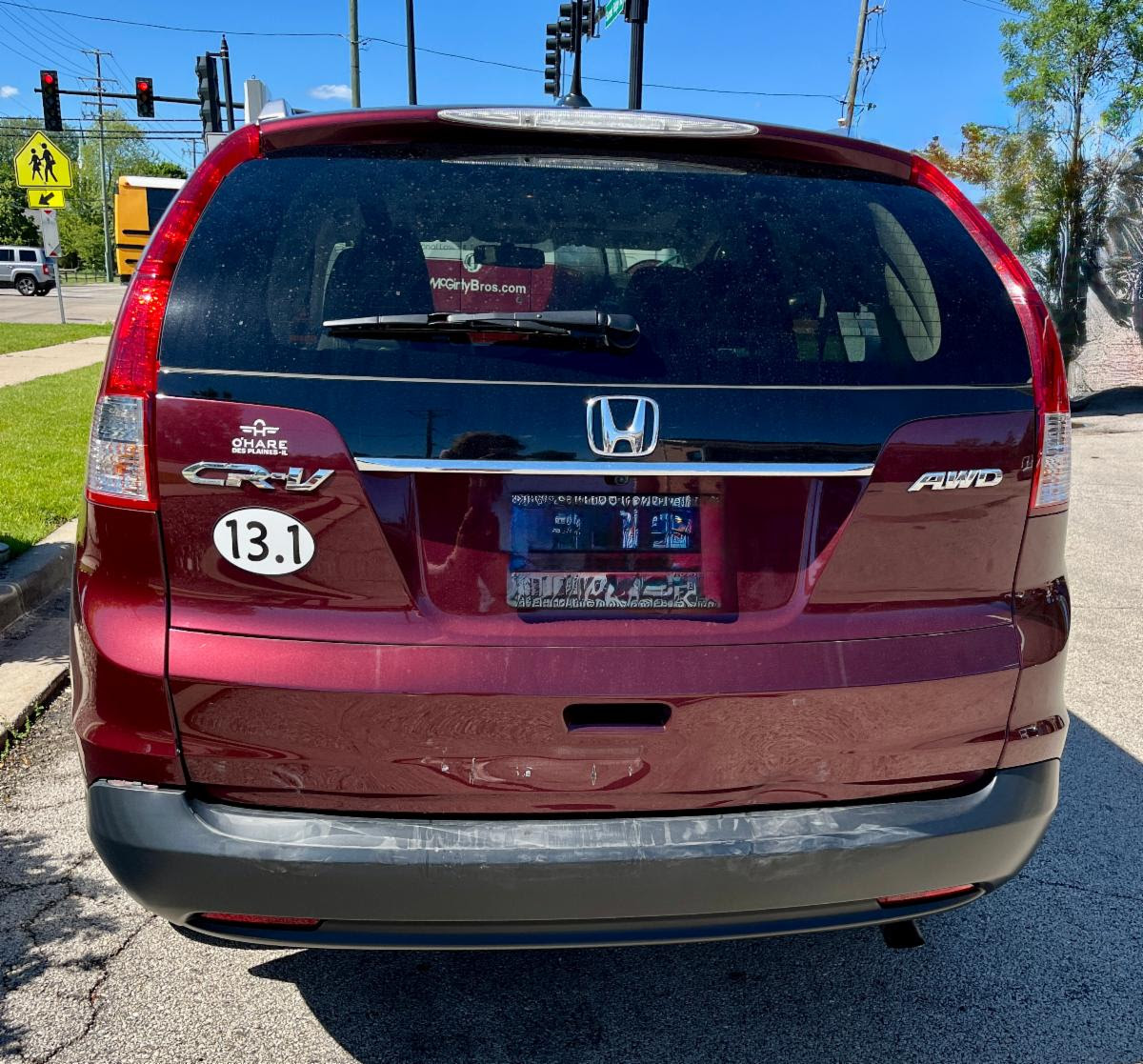
If your rear-end accident experience is anything like mine from two years ago, your car may have looked “a little off,” but not terrible.
Mine was a fairly high-impact collision (about 35 mph while I was stopped at a stoplight) and buffered by another vehicle in between. Warm weather and brand-new drivers … not a great combination.
The car was still drivable, so I brought my Honda CRV to the body shop a few days later. The rear hatch looked slightly misaligned — but beneath the surface, there was much more going on.
What wasn’t visible included:
- Stress to the brackets holding the rear closure in place
- Misalignment of the overall vehicle structure
- Impairment to safety system sensors
The Body Has Similar Invisible Trauma
Not surprisingly (at least to me), my body showed similar patterns including:
- Stress: My right arm—on the steering wheel—had stress through the elbow and wrist.
- Alignment: My head and neck were positioned slightly off-center from each other because of the asymmetrical seat-belt restraint.
- Sensory systems: My visual and vestibular (balance) systems were off due to the head shift.
The sensation I experienced afterward? A little spacey. It even showed up in my messaging. When I went back and read what I had sent after the accident, the misspellings were … impressive.
Movement Patterns Disrupted After Vehicle Accidents
Using the unique Bridging® micromovement assessment and problem-solving approach, effects to the body’s structure became clear. The accident created compression and torque patterns that threw me off-center and were behind what I was feeling. We find similar effects with clients as well.
Left unaddressed, these disruption patterns will often show up in your day-to-day expereiences as:
- Persistent tightness
- Unexplained pain
- Movement that feels “off”
- Fatigue
And yes, sometimes the effects affect you for years after the accident.
A short Bridging session helped restore my movement quickly. My car, on the other hand, took weeks — and still wasn’t quite the same.
The Physics: Body vs. Vehicle
If you’ve been a regular reader, you know how I approach pain and movement — through structure, flow, and physics.
Let’s look at three key ways the body is designed to work — and how the vehicle accidents disrupt them. (I’ve included an image to help you visualize.)
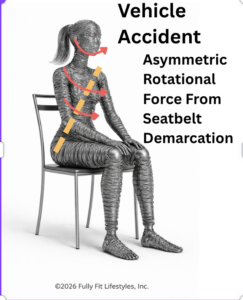 1. Symmetry (Centered Alignment)
The body is organized around a midline:
- The sternum in the front
- The spine in the back
This centered structure allows for efficient movement and minimal strain.
Accident effect:
Rear-end and side-impact collisions introduce fast, angled forces. These forces cause the body to ‘fold’ forward on a diagonal, not the center, creating a torque.
Because the force hits so quickly, the torque to the body structure creates small shifts in muscle alignment which leave the body functionally stuck off-center. This can then:
- Create ongoing muscular stress
- Affect multiple joints
- Go unnoticed — but still impact how you move
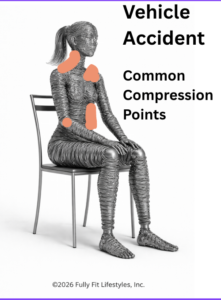 2. Flow (Coordinated Movement)
Movement should flow smoothly from one part of the body to the next.
When one area gets off-center, another part compensates to keep you moving. If the disruption is large enough, movement becomes restricted, jerky, or “stuck.”
Accident effect:
Force from an accident can interrupt this flow. The off-center forces and torques create breaks in coordination between various body zones. The result is often tightness that doesn’t stretch out or resolve with exercise.
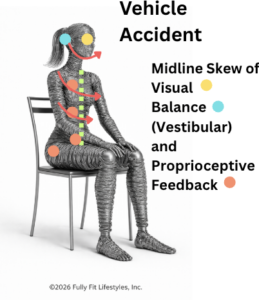 3. Sensory System Function (Your Internal GPS)
Your brain relies on the following three systems working together to guide movement and reactions:
- Visual (eyes)
- Vestibular (inner ear/balance)
- Proprioceptive (body awareness)
Together, these sensory inputs tell your brain where you are in space, so your brain can direct how the body should respond.
Accident effect:
If one or more of these sensory systems is shifted off-center due to muscle shifts, your brain receives inaccurate information. To compensate, your brain has to work harder which often shows up as:
- Brain fog
- Fatigue
- Slower reaction times
- Movements that feel slightly “off”
Micromovement Assessment
The Bridging’s micromovement assessment looks at all three aspects of how your structural system should function:
- Symmetry
- Flow
- Sensory reactions
In just a few minutes, we can identify how your structure is, or isn’t, working for you. The following videos walk through what we typically find for the two types of vehicle accidents.
Hidden Effects of Rear-End Accidents
In this video I walk you through the most common points of impact, along with a description of how the stress plays out in your aches and pains.
Also shown are typical ways the muscles need to be reset for symmetry and flow.
Hidden Effects of Side-Impact Accidents
In this video I walk you through the different ways that forces from a side-impact collision leave your core wondering how to work, and why this leaves your upper body crooked and sore.
Also shown are typical considerations for working when resetting muscles impacted by this type of accident.
When Bridging Isn’t an Option for Help
Many of you already work with trusted professionals including:
- Physical therapists
- Massage therapists
- Trainers
- Chiropractors
Understanding the invisible effects discussed above can help guide them toward more specific and effective support. Sharing this newsletter and video links can be a good resource to introduce the concepts to factor into their thinking.
The details of how your injury happened often hold the answer to how to effect changes that actually help.
Next: The After-Effects from Appendix or Gallbladder Removal