
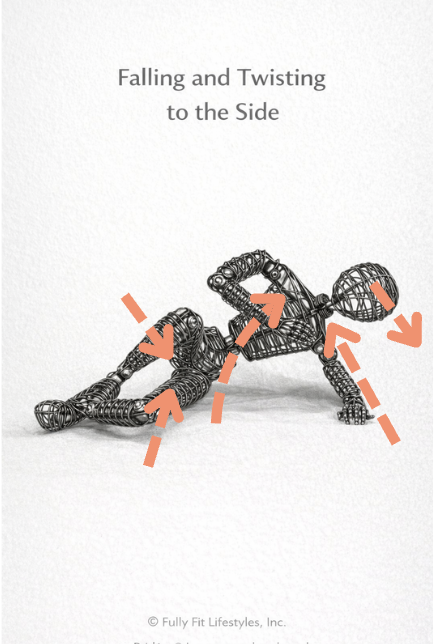
One Year Ago, I Fell. Recovery Insights to Share.
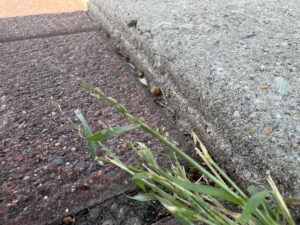 This is the scene of the incident. The gap from pavers to concrete. The height difference is nearly an inch.
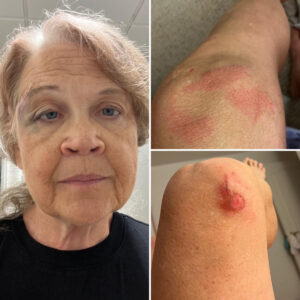
With tree shadows that morning, I didn’t accurately read the grade change and my new shoe snagged. (I was breaking them in. Ugh!) Before I knew it, I was face-to-face with concrete, and quickly aware of blood dripping from my knee and elbow. My habit of carrying an extra tissue came in handy.
Stunned, I rolled over and took stock. Nothing seemed broken so I slowly got up and went on to walk a couple miles in the hope of keeping my muscles from locking from the shock.
Once home, I pulled out a bag of frozen peas and naively thought I did a pretty good job of keeping my bruised eye from swelling. Only now am I able to laugh about the many shades of purple yet to come.
It seems nearly everyone has a story of falling. My experience opened my eyes to the long recovery and some of the frustrations which surfaced months later.
You may have had a similar experience if you’ve fallen. Drop me a note. I’d really like to hear how yours happened and what surprised you about your recovery.
Read on to learn more about the year afterward. This includes:
- Why is falling such a concern?
- Typical recovery and what gets overlooked.
- What were the phases of recovering my strength and confidence?
- Thoughts for you and your movement professionals for recovery after falling.
Falling. It Happens and It’s a Big Deal.
Falling gets a lot of attention in the health and wellness space, as well as in the aging and senior care space. Much of the focus revolves around fall prevention (great in theory!), bone density, and mortality statistics.
My thoughts about falling and recovery
- Falling is BAD!
- Broken hips are especially BAD. Broken wrists are pretty inconvenient too.
- Fall recovery often misses the effect of the impact force upon the body. These often are what leave you in lingering pain, or affect your balance long afterward.
- Specific balance skills are rarely measured; specific gaps are not identified.
- Balance exercise is over-hyped (my opinion) because of the above.
Here are some studious resources to provide more general context related to falling:
- From the SubStack post from Erin E, AGEnts of Movement, is a discussion about another side of falling, “How We Talk about Falling”. Link here.
- Loss of independence is the real issue after falling. Walking, living alone, and getting out and about. It all can be impacted. Read more from the NIH here.
- If you want a downer, here are the CDC statistics related to falling. One in every four adults over 65 falls each year. 😳 Here are the full details.
Bruises gone, but still so much more to recovery!
 After a fall, the primary components to recovery are time and patience. There are specific phases to recovery and the following are the most common steps people go through to get back to being active. (They apply to kids too!)
These five steps to recovery are universal, yet they miss some crucial aspects to being fully recovered. My own recovery journey highlights these gaps in detail, and you can read that below.
- Medical attention. Urgent care is often sought out to check for broken bones and/or torn muscles, and to patch up any cuts and large abrasions.
- Time and patience. The body miraculously is able to heal itself. Good nutrition, sleep, and gentle activity are the key factors.
- Easing back. Gradually increasing your activity and exercise as your body feels capable.
- Circle back to medical. When healing is stalled, pain persists, or full recovery of strength is elusive, sports medicine and physical therapy are often added to the plan.
- Then what? You still feel unsteady or weak, may have pain, or are not sleeping well. Medical has cleared you of what’s in their scope. What else can be done? Plenty!
In reality, there are four additional aspects of fall recovery remaining.
Four Gaps in the Standard Recovery Approach
Recovery Gap: 🟥 Injury (Falling)
At the Bridging® Institute, we find identifying the effects of how you hit the ground and the specific balance skills impacted by the fall makes all the difference in regaining movement confidence and capability.
The four recovery gaps that exercise and balance training miss are:
1. Restoring muscle coordination in the specific muscles affected by the fall.
In a fall, your muscles are twisted, compressed, and sometimes, elongated such that they are not able to work with their reciprocal partners as they should. This can cause stress, strain, and weakness. For example, catching yourself when falling can disrupt the reciprocal pairing of the biceps and triceps muscles.
2. Restoring core movement symmetry, often torqued upon landing.
The impact force of falling upon the body often creates a torque resulting in asymmetry of how the core and each side of the body are oriented. Sort of like your car getting hit, the muscle framework organization is shifted from impact.
3. Restoring muscle timing, a function of movement and sensory feedback systems.
The asymmetry and lack of muscle group coordination results in slowed reaction time needed to maintain fluid movement and balance control.
4. Restoring specific micromovement function as it relates to your life, activity, or sport.
The details matter when the injury disrupted movements related to specific limb-core positioning (dance, martial arts, yoga) or hand grasp patterns (tennis, arts, writing or keyboarding.)
Thoughts for You and Movement/Therapy Professionals
 Here are some thoughts about recovery after falling:
For you
If you’ve done all the recommended steps for recovery, but you’re still missing strength, confidence and/or ease in function, there is more possible.
Share this newsletter with your trusted professional to help them tune into the often missed aspects of fall recovery.
For therapy and movement professionals
A few suggestions come to mind:
- Construct a diagram of the known injuries and impacts, and consider what’s missing. Every single one of the impact areas will impact movement transitions between muscle groups.
- Test reactions and balance. Although day-to-day activity may seem adequate, there are likely hidden gaps in skills.
- Check respiration and diaphragm function. A hard landing will produce a shock wave through the body, disrupting diaphragm movement. This can result in poor sleep, poor coordination, and tight hip flexors trying to hold the body together. The diaphragm is often the key to so much getting back on track after falling.
Each of these are keys to regaining strength, coordination, and confidence. Being aware of the presence or absence of these interactions can guide you to a more comprehensive treatment plan.
What was the recovery process I went through?
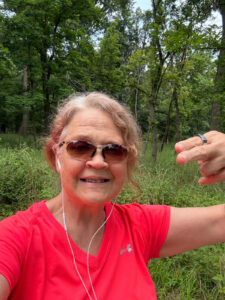 It’s been a year. I’ve been running and working out since a couple weeks after my fall happened. These are the steps I went through.
- Anything broken or torn? No. Abrasions were tended and allowed to heal. Bone bruises spent time with a hot pack each night. My face was another story–heat, cold, and cranial-sacral work to help with the swelling on my face from how it hit the ground.
- Swelling at my knee that wasn’t resolving. I realized the way I fell resulted in an extreme torque on the inside edge of my knee, trapping fluid from draining, much like a kinked hose. I did session with my Bridging team who were able to reset the muscles for correct knee movement. The swelling went down almost immediately.
- Sleep and breathing. After a few days I realized my sleep was not recovering, nor respiration rate. Thank you Oura ring biometrics! The impacts on my left knee, and right upper body made clear I had hit the ground in a twist. Once again, time with my team worked wonders to decompress and re-center my core muscles. The deep breath I could take as a results of that process was immediately calming.
- Strength training recovery. My right hand and shoulder took quite a bit of the fall impact. Muscles were not happy, but using them helped with recovery. I had to slowly work back up to my full workout and strength levels. It took nearly two months.
- Coordination and timing recovery. Several months after the fall I began a tap dance class and was fascinated with how much more challenging the rhythms were with my left foot and leg. This was the knee I landed on. Back to my Bridging team to reset out the coordination of my knee muscles with my foot muscles.
- Balance skills. Once acquiring the BTS balance measurement device in March 2026 I tested my balance skills. My left leg balance was less than the right, and my ability to dynamically shift my weight to track in various directions was slower than it should be. The Bridging assessment work related to this detail revealed missing foot and ankle micromovement. (Which have contributed to the fall. Oh my!) We went to work on fixing this; I need to find time to re-test to document the improvement.