
Annie’s Story: What Gets Off-Track After Minimally Invasive Infant Surgery
 In the last part of this series about the disruptions from minimally invasive surgeries we bring it all together with a case study.
Meet Annie to see how her early life surgery has impacted her throughout childhood, and how Bridging® resets have helped her.
(Much gratitude to Annie and her mom for helping me share this story by sharing photos and their recollections.)
Each day at the Bridging Institute we see a variety of people with pain and movement concerns, and many of them have a minimally invasive procedure in their past. Although the scar is minimal, the surgery is deceptive in terms of how the core muscle coordination can be disrupted.
What we’ve covered in the series:
Week 1: The procedure—and why it disrupts movement (Link here)
Week 2: Bridging® support at different points in the recovery process (Link here)
Week 3: Why the implications for children vs. adults differs (Link here)
Week 4: The story of Annie, who had infant surgery 14 years ago
Annie … Through the Years
Annie and I met 12 years ago when her mom was concerned that she wasn’t walking yet. She is a twin and her brother had mastered this motor skill much earlier.
Three things from birth played a role with Annie’s challenges to coordinate her core and legs:
- Twin: She is a twin which means that due to prenatal space limitations, her muscles didn’t have a chance to learn all their practice moves before birth.
- Torticolis: After birth, her head was excessively turned to the side. This common condition is thought to be a muscle imbalance of shoulder and neck muscles. Her head and neck had plenty of attention with physical therapy in her first year.
- Pyloric Stenosis (Stomach) Surgery: The life-saving surgery left her with three tiny scars on her abdomen. However, deeper in her core, the scars also acted like hot glue globs restricting muscle coordination. The impacts continue to surface since the strain on the abdominal muscles changes as she grows.
So why Bridging? How did we address the core issues related to walking? And how did she benefit from Bridging sessions over the subsequent years? That’s what we’ll get into next.
As a reminder … these are the most common reasons the laparoscopic process is used with children:
- Appendix removal
- Hernia repair
- Duodenal or Pyloric Stenosis repair (stomach)
The kids we meet at the Bridging Institute often have coordination concerns, including delayed or derailed developmental milestones. They may also have core strength challenges, anxiety, and GI concerns.
Annie is one of these. We met when she was 18 months old. Her story brings to light the ways that the minimally invasive surgeries impact movement development, even years later.
Generally, medical follow-up after surgery for kids does not consider:
- How abdominal muscles are coordinating
- Whether core muscles are functioning as they should
- How overall movement patterns may have changed due to compensations
- Which developmental movements and postures may be impacted by the surgery
Just because kids are resilient and recover quickly, does NOT mean their motor skill development recovers! (And these effects can carry forward for years!)
Here’s a timeline of how we addressed disruptions to Annie’s devlopment as she grew.
Key Disrupters to Annie’s Early Movement
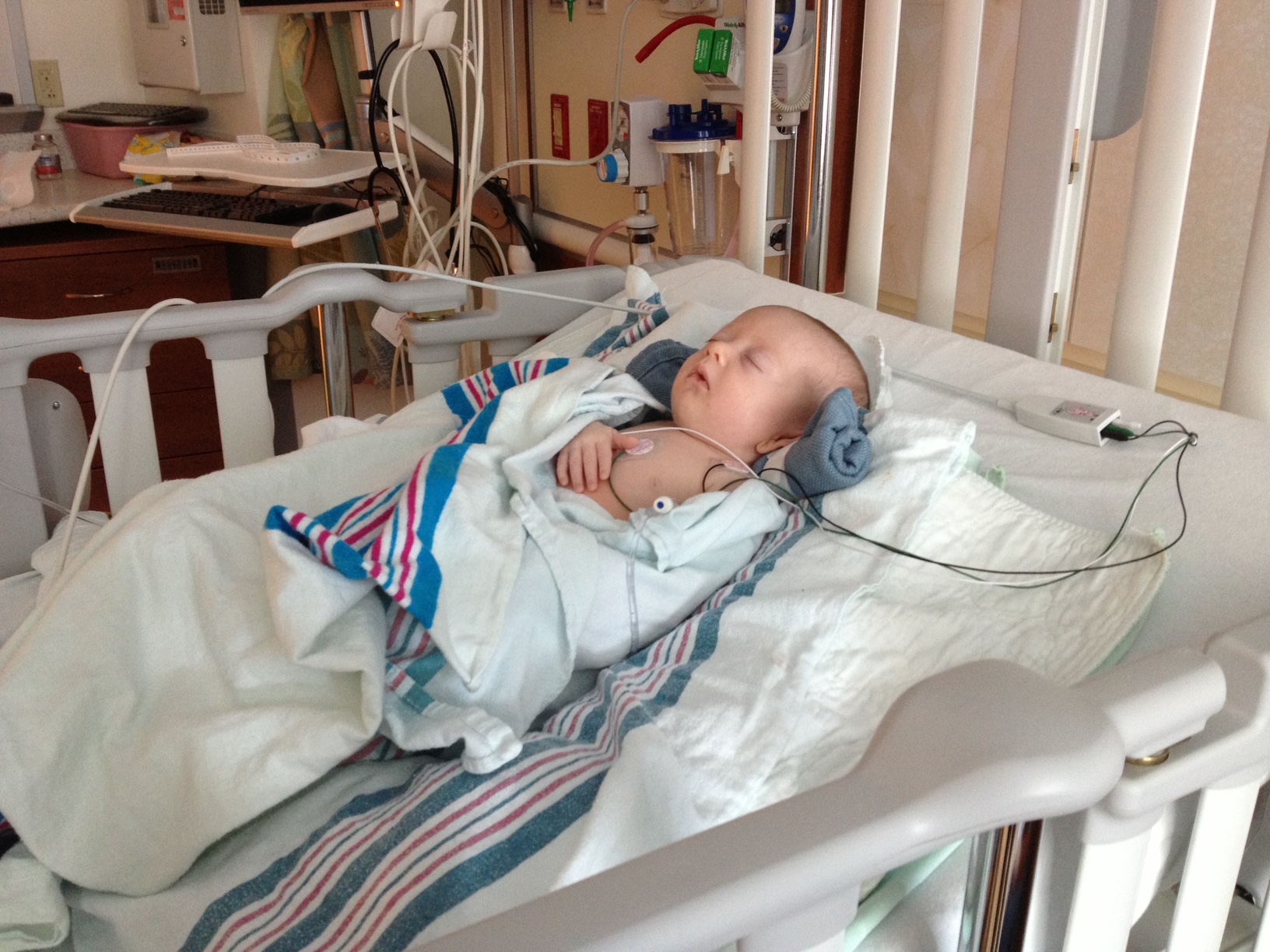
After Surgery
 Photo: 7 weeks old after surgery for a blocked connection coming from the stomach, called Pyloric Stenosis.
The conventional thinking is that after the surgery and recovery, a child goes on to lead their best life.
This completely misses that the early surgery also interrupts the orderly development of the muscles which are affected by both the procedure and the tightness of the internal scars left behind.
Not Yet Walking on Her Own
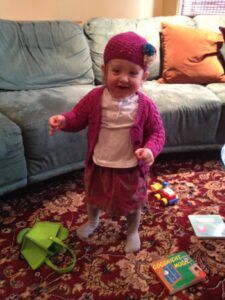
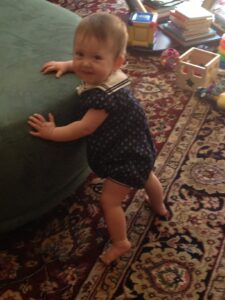 Photo: 15 months. For a couple of months Annie had had the mechanics for walking but she would only walk when holding onto the sofa.
We met at this point in time because mom was concerned that she wasn’t walking independently yet. Due to all three factors — torticolis, twin development, and the surgery — her development had been asymmetrical. Also, a key transition between her legs and core was missing.
Using the gentle Bridging muscle resets, her core muscle movement became more centered. By resetting the missing skills, we find that the little ones usually figure out the next stage of development in the coming days and weeks.
While explaining this to mom after the session, we turned to see Annie taking steps! A favorite memorable moment of mine.
Tummy Time…and Hated Every Minute!
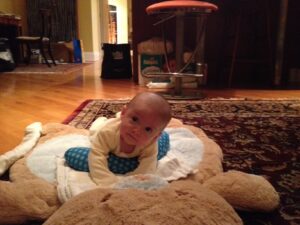 Photo: age 6 months. Annie doing tummy time, “which she hated.”
You can see in the photo how Annie is tilted and not putting weight onto the side where the surgery had been months earlier. Clearly she is not comfortable, and the tilt skews core-limb muscle development.
This developmental disruption played out several years later as Annie’s mom described here.
“At age 3-4 years old, we noticed that when she laid on her back one side of her chest was sunken in and the other side puffed out. Annie’s PT was not sure why this was happening. Her pediatrician was not sure why this was happening.
They (the Bridging Institute team) figured out that the problem was the scar tissue from Annie’s surgery was pulling her body out of line (attaching inside at an angle and not stretching as quickly as she was growing). Once her scar was supported the muscles around her chest coordinated better, and her chest structure evened out.
At this point we realized this was going to be a continuing concern until she stopped growing, so we check in 2-3 times per year.”
Insight: The Ongoing Issues from Early Life Surgery
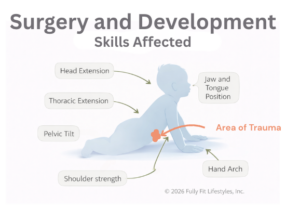 Considerations:
Kids continue to grow after surgery. The scars fade, but the disruption to essential micromovements is real.
Why is the impact on development such a big deal?
Think of the scars and internal disruption as hot glue globs which stiffen as they cool. The ‘glue’ spots have a different tension than the original elastic muscle and skin. As the child grows, these ‘glue’ spots don’t naturally stretch and transition, causing tightness and movement limitations.
Karate Kicks
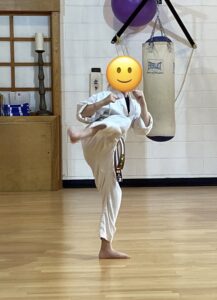 Photo: Annie around age 10
Over the years, Annie and I have worked together 2-3 times a year. There is always something in her strength or coordination that surfaces due to how it impacts her activities. We often find the core movement restrictions related to the early surgical scars are a key factor.
Karate kicks, punches, and arm holds have all been problematic skills at one point in time. Why?
The intricacies of her core muscle function should link to and support her leg or arm strength. However, this support was locked out due to the early muscle disruptions from the surgery.
The Bridging assessment process allowed us to surface the relevant micromovements. The gentle Bridging muscle resets allowed the limbs and core to reorganize so they can rise to current physical demands.
Her Neck Tightness and Arm Strength
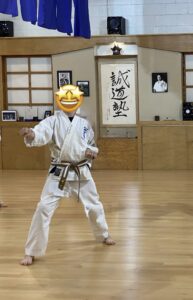 Photo: Annie around age 10
Not specifically related to the surgery, but another reason Annie has follow-up Bridging sessions is for the neck muscle tightness related to the early torticolis.
Also involved with her neck tightness was arm strength. She couldn’t hold her arm up for more than a few seconds. This turned out to be a relationship between the core muscles and shoulder muscles that never got a chance to develop because of the early surgery.
Mom shared, “Annie remembers you working with her head and neck movement in particular. She said she went into your office with her neck feeling very weird. After you worked on it/unwound the problem, it felt much better.”
And Currently, Coordination
 (No photo of Annie at age 14.)
In addition to fine tuning neck muscle movement, we’ve been working on coordination.
This year Annie got involved with her school’s theater program after school. In the show chorus, some of the dance moves have been a challenge. We broke them down to isolate the core muscle transitions that needed support and, voila!, the moves got easier to do!
It’s been an honor to be involved in their lives for so long, and see how Annie has blossomed over the years with specific support along the way.
As with any story, there is so much more — but these have been the key points.