
Spinal Muscles Tight, Stiff, or Painful, Even After Surgery?
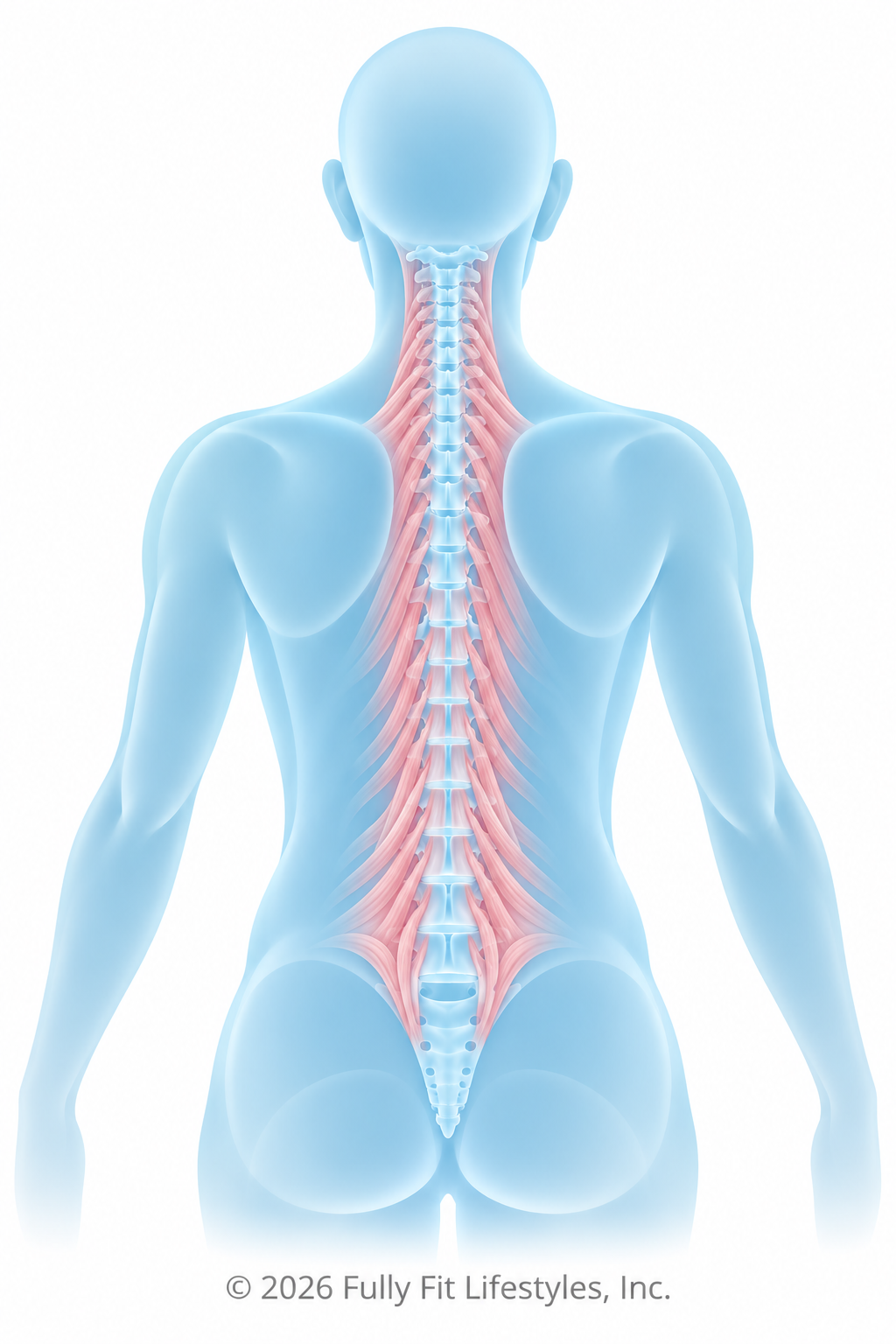
Are your back muscles along your spine tight or painful?
If so, there is a good chance that the smaller muscles in this area aren’t working with each other in the intricately coordinated way they are supposed to.
How are these muscles supposed to work together?
Think of a zippered up ‘wave’ on each side of the spine. These small muscles activate in ripples up and down, as the right and left side muscles of the spine flow in synchronized pairs.
How would this muscle synchrony get upset?
It’s usually an injury or medical procedure!
Recently, I’ve worked with several clients who underwent spinal surgery. They had movement and balance challenges despite being discharged from their therapy programs. Their surgical recovery left them unsteady, weak, and frustrated.
Amy is one, and we’ll look at how her recovery improved with one specific support.
There IS more recovery possible!
That’s why I want to share this insight with you. Please share with others who have had back or spinal surgery that want to be more active, and feel good about it.
Beyond the back surgery recovery
 Although not as common as knee and hip replacements, it seems that spinal surgeries are becoming more common. Better surgical processes and anesthesia are two of the reasons for the increase.
Common procedure types include spinal fusion, laminectomy, and discectomy. The goal of each procedure is to stabilize sections of the spine that may have been damaged or shifted out of place by repetitive stress or injury.
The typical recovery from spinal surgery includes a period for healing, followed by light activity, physical therapy, and then, return to regular activity.
My clients did all of this and were discharged by their neurosurgeon. BUT …
Although their pain was gone and their movement was good enough to graduate, they did not feel like themselves, nor were they confidant about doing the activities they hoped to do.
Amy is one of these spinal surgery recovery clients.
She had surgery months ago and was finishing her therapy. An active professional, she enjoys the outdoors with her children and grandchildren, gardening, and travel. One of her legs was markedly weaker and her balance felt oddly unsteady.
What else could she do? Below I outline the process we followed, and why it addressed a missing step in the surgical recovery process.
After her Bridging session, Amy was amazed at how fluent, easy, and steady her movement felt. ☺️
What’s the issue from the muscle perspective?
Spinal muscles’ job description
The small muscles up and down each side of the spine primarily keep your spine stable and aligned while it moves in a multitude of directions. Often this movement leverages the load that you lift, push, or pull with your arms.
The spinal muscles also coordinate leaning forward/back, side to side, and rotating. To do this, the spinal muscles coordinate with your ab, oblique, and lat muscles, as well as your arms and legs. A pretty important job for a bunch of small muscles!
These muscles activate in sequence similar to a wave, moving like a snake– up, down, forward, back, around, and sideways. **THIS SEQUENCING IS A KEY POINT.**
When injuries cause stress, dislocation, or damage to the discs or the bones, a surgical procedure is often recommended. The surgical procedures typically reposition the affected parts of the spine, and mechanically stabilize specific sections.
These procedures address the structural damage, but the impact to the surrounding muscles gets swept under the carpet.
You have relief from pain and worry, but can also end up with diminished movement.
Why is your movement affected?
 The sequential wave activation is the key. When a segment of the spine is disrupted by injury and/or surgery, the muscles lose their timing. The wave feels like a wrench got thrown in to jam up the movement.
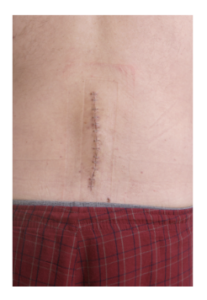
This is what happened to Amy. The 6-inch surgical incision was on one side of her lower back. This upset the muscle sequencing in three ways:
1. The muscles above and below the scar could not sequence properly.
2. The muscles on the left and right lost their ability to coordinate, affecting her sideways balance.
3. The affected section of her back lost its ability to coordinate with her leg, causing weakness.
What can be done?
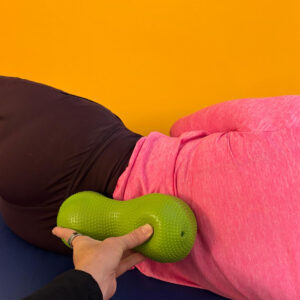
The simple answer is to support the muscles to guide the sequence back into its flow. Yes, it’s a bit more complicated but I’ve provided some guidance for your trusted massage or physical therapist.
(In the photo, a small pliable peanut ball is used to support the 6-inch incision zone. A folded washcloth or the edge of your hand can also be used as a support.)
Thoughts for your massage or physical therapist
Recovery Gaps Identified from Spinal Surgery
🟦 Medical Procedures
If your client/patient has had a tough time with balance, mobility, or strength, following a discectomy, laminectomy, or spinal fusion, some steps to consider follow below:
Taking each of the steps that follows, allows the impacted muscles to relax and reorganize more quickly, and can guide your patient to a more complete restoration of movement flow, ease, and strength.
If you’re interested in learning the Bridging® muscle resets to better help your patients after injuries or surgeries, there is a new cohort kicking off February 6, 2027. Add your name to this list and you’ll be notified first when registration opens.
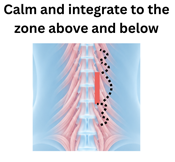 1. Support the surgical scar area to stabilize the affected muscles. Use the other hand to gently rock the muscles at the area adjacent to the surgical disruption. Once the muscles calm down and are ready to work again, the movement in the area becomes smooth and engaged.
NOTE: This step is appropriate with medical clearance for light movement. Often this is 4-8 weeks post-procedure, depending upon the specific intervention.
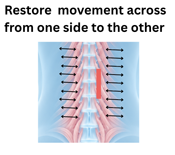 2. Guide the movement to link integrating the scar zone. Stabilize the scar area–this area is not going to move. Gently rotate the area above the scar while guiding the full scar zone to link and move with the zone above and across.
Repeat this process while guiding the lower side of the scar. The entire zone should smoothly link to the areas above, below and across to restore continuous muscle sequencing.
Note: This step is appropriate with medical clearance for exercise including rotation. Often this is 10-12 weeks post-procedure.
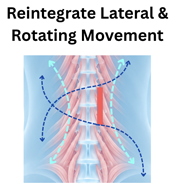 3. Guide the movement when adding lateral, forward flexing, and backward extending. Stabilize the patient/client’s scar area similar to step 2 and guide through these additional planes of motion. Once the scar zone muscle activation pairing is restored, progressive loading with exercise can begin.
Note: This step is appropriate with medical clearance for exercise including rotation. Often this is 10-12 weeks post-procedure.