
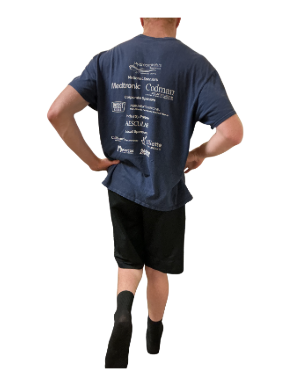
In Search of Balance for Hiking and Working Out
Oh, to be 23 again!
The world is an oyster, and Alex is trying to take in as much as he can. While away for school he started hiking to enjoy the new surroundings. His school’s wellness program offered personal training. He took advantage of that too!
In the process of becoming more active he began to realize his balance could be better. The trainer he worked with was focused on functional fitness, including balance. As they worked on it, his balance has improved.
Alex was recently in for a tune-up to address general over-use muscle stress. We took the opportunity to also test his balance to see if there might be more opportunities for improvement.
What we found, and why he would need to work on balance as a young adult, are the most interesting parts of this story that follows.
If his story resonates with you, you’ll also find insights for movement professionals at the end, which you can forward to your team.
Why Would Balance be ‘Off’ for a Young Adult?
 In general, most adults will assume kids are capable of all their basic physical skills for life, unless it’s something super obvious.
In Alex’s case, we might assume this college student, who is physically active, would have pretty decent balance skills.
This assumption would be wrong.
Why would his balance be off?
The clues lie in his early development. Born early and hospitalized for some time afterward, his little self was focused on survival, instead of play and learning to move around.
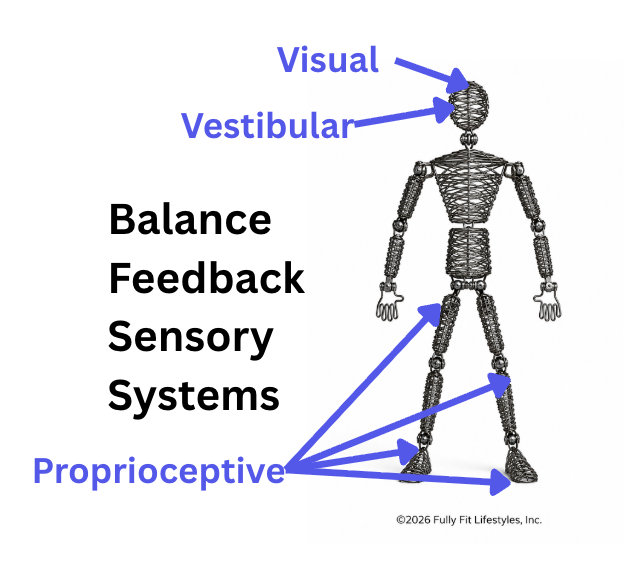
His early months of tummy time, rolling around, and sitting like a roly-poly were experienced differently given his fragile beginning. The changes in his early development period kept his vestibular (balance) system and his body from developing the nuanced coordination he should have had.
As a young adult striving for more physical activity in his life, his shaky balance skills became more noticeable.
What has he already been doing to help?
His trainer at school designed specific balance and strength exercises to target general deficits observed in his balance while performing other movements. These have been helpful in many regards, improving steadiness and coordination.
But, he wondered, was there more?
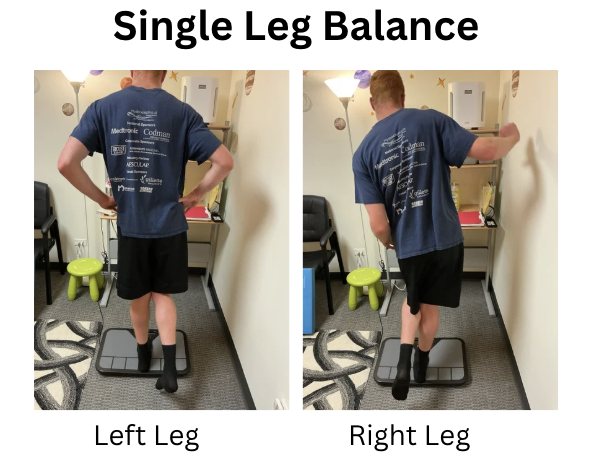
Yes! Using our new Balance Tracking System (BTS) device, we measured various aspects of balance to pinpoint more specific areas which might benefit from some attention.
What we found were two areas of balance ripe for improvement:
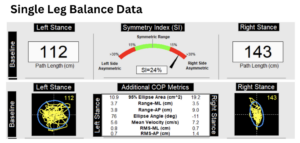
- Single Leg Balance: He had a difference of 24% between the right and left leg.
Sensory Balance: This test teased apart the visual, and kinesthetic (proprioceptive) aspects of balance. All showed room for improvement. Read more about these tests here.
For those of you who are interested in his test details, find them at the end of this article.
Next Steps?
Now that we’ve identified the specific micro-skills of balance that need attention, there are two parts to pursue for improvement.
Part 1: Targeted Bridging muscle resets with each leg and his core to enable micromovements between the smaller muscles at each joint in the foot and leg.
Why Bridging and not just specific exercises? By age 23, if those muscles were going to wake-up on their own, they would have done so already.
In a previous newsletter, I discuss how disrupted early life development can leave muscles functioning like a dried-up sponge, waiting for drips of water to gain pliability. Exercise alone does not restore this muscle function, nor does it help the new micromovements integrate into the larger movement repertoire.
Part 2: Activity and exercise AFTER Bridging to reintegrate the new abilities of these small muscles. The enhanced sensory input from increased muscle activation needs the same fine-tuning of reactions that a baby spends hours upon hours doing.
This is one reason we strongly advocate for being active after a Bridging session. The brain needs to update its code to recognize and process new sensory feedback from the body.
We look forward to Alex’s progress update and balance re-test later this year.
Thoughts for Your Movement/Therapy Professionals
Recovery Gaps Identified from Early Life Medical Interventions
🟩 Early Development 🟦 Medical Intervention
Suggestions for therapy and movement professionals
If your client/patient has a hard time with new skills, here are a few steps to consider in formulating a action plan:
1. Micromovements. Instead of showing the overall movement or skills you’re working on, break the skill into very small micromovements. You might even guide the limb or joint to neurologically pattern the movement.
2. Slow down the movement. Speed often covers up poor control. Once you find the rocky skill segments you can begin working on the breakdown related to these.
3. Work from a zone of success. Support and/or guide a muscle or joint through a movement beginning at the section that moves most correctly. This might mean directing movement from the knee instead of the foot, or working in the direction of the easiest movement when turning, even if it seems backwards.
Taking each of the above into account allows the various muscles to relax and reorganize more quickly, and can guide you to a more complete resolution.
Balance Testing Details for Alex
Test Results for Alex
Single leg balance symmetry: The difference between right and left leg exceeds the recommended level. Yes, there is one side that needs more support!
Sensory-related balance skills: The difference between needing visual and proprioceptive sensory feedback (feedback from our tendons and muscles) indicates this is an area for improvement too.
After 2-3 Bridging session s this fall we will retest to see how he’s progressing.